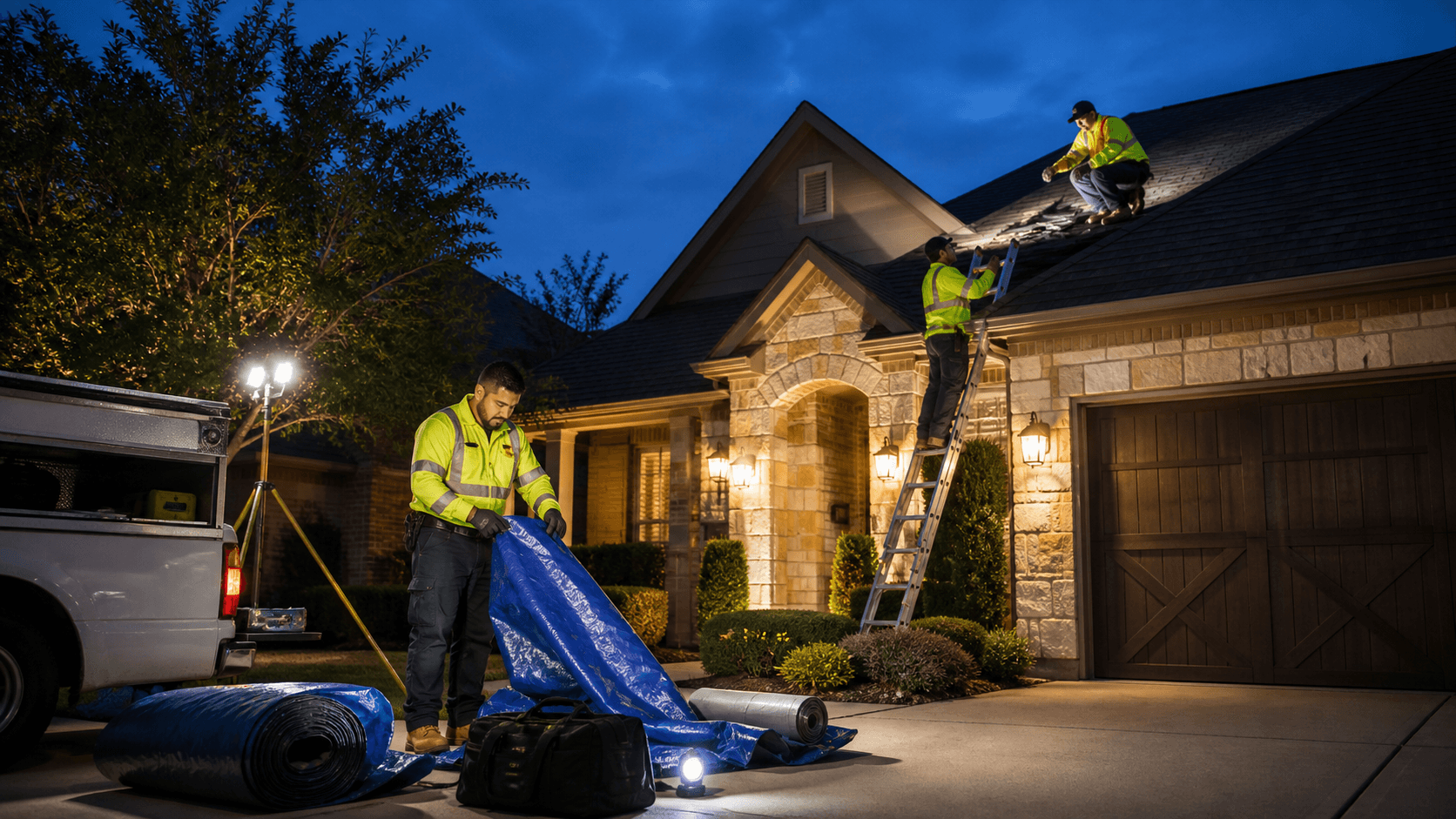
How Summer Storms Quietly Destroy Roofs in Plano
Summer storms in North Texas can go from calm to scary in minutes. One moment the sun is beating down, the next the sky turns dark, the wind picks up, and hard hail starts slamming into everything outside. Many homeowners think of hail as a spring problem, but those mid-summer storms in Plano, Prosper, Frisco, Celina, and nearby areas can be just as hard on your roof.
What makes summer hail tricky is that the damage is not always obvious right away. From the ground, your shingles might still look fine. No missing shingles, no dripping ceiling, so it is easy to shrug it off and move on with your week. The problem is that summer heat changes the way hail hits, and it can quietly chew away at your roof long before you see a leak.
At WM Contracting, we work on residential roofs across this part of Texas, and we see the same thing over and over again: roofs that took a beating in summer storms but were never checked. Months later, the owner is suddenly dealing with stains inside and does not know the real cause. Let us walk through why summer hail can be worse than you think and what to watch for on your own home.
Why Summer Heat Makes Hail Damage Worse
When the Texas sun has been cooking your roof all day, your shingles are not in their strongest state. Asphalt shingles soften in high heat. That soft surface makes it easier for hailstones, even smaller ones, to bite into the shingle instead of bouncing off.
Here is what happens when hail hits a hot roof:
- Hail can bruise shingles, leaving soft spots that break down over time
- The impact can crack the asphalt layer that keeps water out
- Protective granules can be knocked loose much more easily
Those tiny granules on your shingles do more than make the roof look nice. They help protect the asphalt underneath from harsh UV rays and help shed water. When hail knocks off those granules, it speeds up aging. The shingles dry out faster, get more brittle, and lose their ability to keep water from soaking through.
From your yard or driveway, that kind of damage is hard to see. A hail damage roof in Plano might not have big holes or obvious missing sections. Instead, it has:
- Dark or shiny spots where granules are missing
- Soft or "mushy" areas you can feel only when walking the roof
- Hairline cracks that slowly widen with more sun and rain
Those subtle changes can turn into leaks months or even years later. By the time you see a stain on your ceiling, the damage inside the roof system has already spread.
The Science Behind Plano's Summer Hailstorms
Our area sits in a sweet spot for wild summer weather. Hot, humid air hangs over North Texas. Then a fast-moving cold front or a disturbance high in the atmosphere moves in, and the mix of hot and cold air gives storms a lot of fuel.
Inside those storms, strong updrafts blow hailstones up and down through the clouds. Every time the stones are lifted, they pick up more layers of ice and grow larger. When the updraft finally weakens, gravity wins, and the hail falls toward the ground at high speeds.
That is how we end up with storms where:
- Hailstones stay in the clouds longer and grow bigger
- Wind drives the hail sideways into roofs, siding, and windows
- Hail hits roofs with more force than many people expect
Plano, Frisco, Prosper, Celina, and other fast-growing suburbs have long stretches of open neighborhoods, wide streets, and few tall trees or tall buildings in some areas. There is not much to slow a big storm down once it rolls across Collin or Denton County. When that hail core lines up over your subdivision, your roof may be taking hundreds of impacts in a very short time.
Hidden Signs Your Roof Took a Summer Beating
Right after a hailstorm, you may walk outside, look up, and think everything looks okay. No shingles in the yard, no water dripping from the ceiling, and the house is still standing. That does not mean your roof escaped.
Instead of only staring at the shingles from the ground, check for these subtle signs around your property:
- Roofing granules in your gutters or piled at the bottom of downspouts
- Dark circles or bald spots on shingles when viewed from a window
- Dents or dings on metal vents, flashing, or chimney caps
- Spatter marks or cleaned-off spots on AC units, fences, or mailboxes
These clues often show that hail hit hard enough to mark metal and strip surfaces. If metal got dinged, the shingles likely took hits too. The problem is that shingle damage from hail can let a little moisture seep in at a time. You might not see water inside yet, but slowly:
- Attic insulation can get damp and lose effectiveness
- Wood in the roof structure can start to weaken
- Mold can develop in dark, hidden areas
Because of this, a hail damage roof in Plano is something you want checked sooner rather than later. A professional inspection after any big summer hailstorm, especially if your neighbors have roofers out or your car has dents, can catch small issues before they grow into major repairs.
Roof Insurance Claims and Summer Storm Deadlines
Insurance can help with hail damage, but timing matters. Many policies have limits on how long you have to file a claim after a storm hits your home. Wait too long, and it can be harder to prove when the damage happened or whether it came from one storm or normal aging.
Good documentation makes a big difference, including:
- Photos of your roof and property after the storm
- The date and general time of the hail event
- Notes on dents to gutters, window frames, siding, or AC units
Working with a roofing contractor who understands storm damage can help you gather the evidence you need before talking with your insurance company. One common mistake is calling your insurer first, then having an adjuster visit without a roofer there to point out more subtle damage. Another mistake is making temporary repairs or clearing debris without taking clear photos first.
When the roof on your home in Plano or nearby cities might be damaged, you want someone on your side who knows what to look for and how to explain it clearly.
Protect Your Home Before the Next Summer Hailstorm
You cannot stop hail from falling, but you can get your roof in better shape before the next summer storm hits. A roof that is already worn out, loose, or poorly ventilated has a harder time standing up to hail.
Smart steps include:
- Getting a pre-storm roof checkup to spot weak areas
- Trimming back tree branches that hang over the roof
- Cleaning gutters so water can move off the roof quickly
- Making sure attic ventilation is working to cut heat stress on shingles
Keeping your roof healthy now lowers the risk that the next storm will turn small issues into big ones. And if a storm does hammer your neighborhood, having a trusted roofing partner already in mind makes everything easier.
At WM Contracting, we focus on residential roofs and storm damage in places like Prosper, Frisco, Celina, Plano, Wise County, and nearby communities. We see the real impact of summer hail on homes in our area, from light bruising to full roof replacement. Paying attention to those quiet signs of damage and acting early can help protect your home, your attic, and your peace of mind for many summers to come.
Protect Your Home From Hidden Roof Damage Today
If your home has been through a recent storm, now is the time to have your hail damage roof in Plano professionally evaluated before small issues become costly repairs. At WM Contracting, we carefully inspect every layer of your roofing system so you know exactly what needs attention and what can be preserved. Reach out to our team to schedule an assessment, get straightforward recommendations, and restore your peace of mind. If you are ready to move forward or have questions, please contact us today.