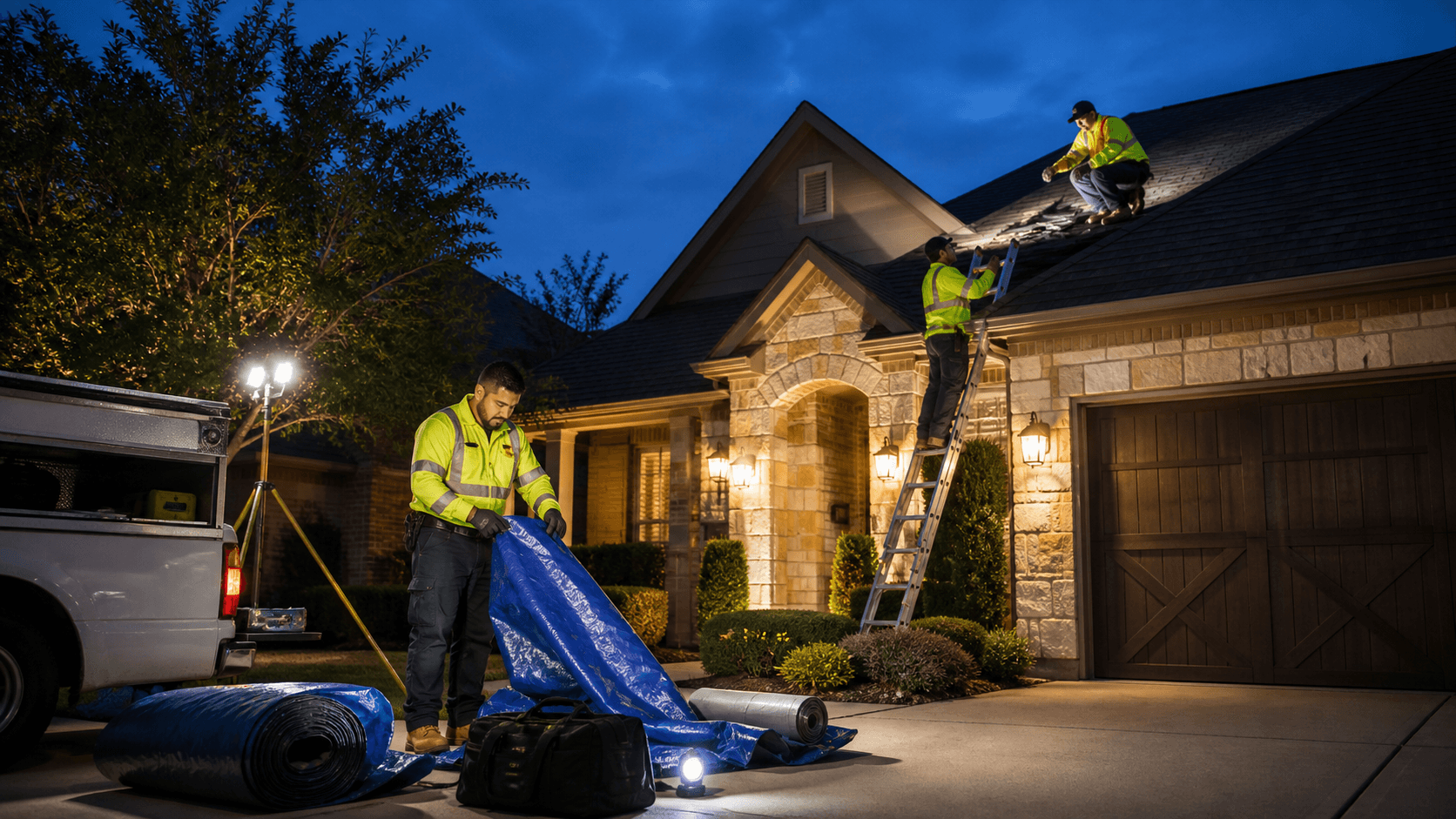
Why Rockwall Homeowners See so Much Roof Damage
Spring storms in Rockwall do not just blow through; they slam into your roof again and again. Many homeowners feel stuck in a cycle of patching leaks, replacing a few shingles, then repeating the whole process after the next hail core or wind event rolls across the lake.
Not every North Texas city takes the same kind of beating. The way Rockwall sits in relation to the Metroplex, the open prairie, and Lake Ray Hubbard creates storm patterns that are different from what you see in areas with more urban shielding. As a local North Texas roofing contractor, we at WM Contracting see those micro-differences every storm season, which is why we focus on detailed inspections and professional storm damage roof restoration. In this article, we will look at why Rockwall gets hit so hard, how local conditions wear out roofs faster, what damage patterns to watch for, and when it is time to bring in a professional.
How Rockwall's Location Amplifies Storm Power
Rockwall sits just east of Dallas, right where the Metroplex thins out into more open land and water. That location matters. As storms move across the heavier urban core, they often meet less friction once they reach the open stretches around Lake Ray Hubbard and the surrounding prairie.
In simple terms, strong storms that start to form to the west can organize into supercells and then track across the Metroplex. By the time they reach Rockwall, there is often:
- More open fetch over the lake, which can let wind gusts accelerate
- Space for hail cores to strengthen without as many obstacles
- Less building density to slow down straight-line winds
Compared to cities that sit deeper inside the urban heat island or have more terrain variation, Rockwall is more exposed. There are fewer tall structures to break up wind flow, and the lake can help focus or channel gusts toward neighborhoods along the shoreline and beyond.
Storm types that often punish Rockwall roofs include:
- Straight-line winds that peel at shingles and ridge caps
- Large hail that shreds granules and fractures shingles
- Quick tornado spin-ups that twist flashing, vents, and valleys
Each of these stresses roofing systems in a slightly different way, and when you live in Rockwall, you tend to see all three over multiple seasons.
Why Rockwall Roofs Wear Out Faster Under Repeated Storms
The problem is not just one bad storm. In Rockwall, repeated hail and wind events layer damage on top of damage, even when everything looks "mostly fine" from the ground.
Cumulative damage builds quietly. Smaller hailstones might only leave light bruising or knock off granules. That might not leak right away, but it sets up trouble later:
- Granule loss exposes the asphalt layer to more sun and heat
- Bruised spots become weak points under the next hail impact
- Loosened seal strips make it easier for wind to lift shingles
Rockwall has a mix of newer subdivisions and older homes, so roof age and original builder choices make a big difference. Two houses can have the same shingle, but:
- An older roof with tired underlayment and marginal ventilation will fail sooner
- A newer roof installed without enough nails or proper flashing will still be vulnerable
- Attics that run hot will age shingles between storms, even on calm days
Add in the local environment. Sunlight bouncing off the lake, temperature swings, and prevailing winds off open fields all make shingles expand, contract, and flex more. That constant movement wears on fasteners and sealant lines so that when another North Texas storm rolls through, Rockwall roofs are already tired from the last round. This is why a roof here might reach the end of its effective life sooner than the same material in a more sheltered city.
Common Roof Damage Patterns Seen in Rockwall Storms
After a Rockwall hailstorm, the signs of roof damage are often scattered but consistent if you know what to look for. From the ground, homeowners sometimes notice:
- Shingle pieces in the yard or driveway
- Dents in gutters, downspouts, and metal trim
- Granules collecting in the bottom of gutters or at downspout outlets
On the roof itself, typical hail damage can include bruised shingles, soft spots you can feel underfoot, or circles where granules are missing. Vents, flashing, and ridge caps may have visible dings that indicate the force of the hail impact.
Wind and tornado-related damage looks different. We often see:
- Lifted or flapping shingles along roof edges and ridges
- Creased shingle tabs that were bent back by gusts
- Broken sealant lines along hips, ridges, and valleys
- Displaced ridge caps or missing sections along the peak
Some of the most serious problems in Rockwall are hidden. Underlayment can tear where shingles lifted and settled back down. Nails can back out slightly, creating paths for water to travel. Moisture intrusion may only show up later as staining in the attic or on ceilings.
These are not always obvious without a trained eye and a methodical inspection. Because many Rockwall homeowners turn to their insurance policies for help, properly identifying storm-related damage that qualifies for professional storm damage roof restoration is important. An experienced local contractor knows how to distinguish true storm impact from normal aging so you have accurate information when it is time to talk to your insurer.
Insurance Claims in Rockwall vs. Other North Texas Cities
Rockwall sees frequent storm-driven roof claims, which means insurers are used to seeing addresses from our area on their reports. That can lead to closer scrutiny of documentation, especially when hail or wind events have affected a broad swath of the Metroplex at once.
Adjusters in and around Rockwall typically look for:
- Clear, dated photos of damage from multiple roof slopes
- Measurements that show how widespread the damage is
- Evidence that the damage is consistent with a specific storm event
Vague or incomplete documentation can slow down a claim or lead to partial approvals that do not fully address the roof's condition. This is where detailed inspection work matters. At WM Contracting, our role is to perform careful roof evaluations, meet adjusters on-site when needed, and help explain how local codes and manufacturer guidelines apply to what we find.
Working with a contractor that understands professional storm damage roof restoration, not just basic repairs, helps keep everyone on the same page. It is not about pushing for unnecessary work; it is about making sure that legitimate storm damage is properly identified and that the recommended repair or replacement matches what the roof actually needs in a high-storm area like Rockwall.
Proactive Steps Rockwall Homeowners Can Take Now
Living with North Texas storms does not mean always being on your heels. Rockwall homeowners can take practical steps to get ahead of the next round of hail and wind.
Regular roof checkups help a lot:
- Have a professional inspection before peak storm seasons
- Schedule follow-up inspections after major hail or wind events
- Pay extra attention if your home backs up to open fields or sits near the lake
Strategic upgrades can also extend roof life in a storm-prone area:
- Consider impact-resistant shingles when it is time to replace
- Improve attic ventilation to keep shingle temperatures more stable
- Upgrade flashing details in valleys, around chimneys, and along walls
After a storm passes, a simple safety-first checklist helps you gather information without risking a fall:
- Walk the perimeter and look for visible shingle damage from the ground
- Look inside the attic for fresh water stains, damp insulation, or daylight through the decking
- Take clear photos of anything that looks out of place or newly damaged
- Call a trusted local roofing contractor for a full inspection before making assumptions about repairs
Climbing onto a storm-damaged roof is dangerous, especially when surfaces are still wet or when shingles may be loose. Trained crews with proper equipment and knowledge of local storm patterns are better equipped to inspect safely and accurately.
Protecting Your Rockwall Home with Local Roof Experts
Rockwall's unique exposure to open prairie, lake-driven winds, and frequent hail means roofs here take harder hits and wear out faster than in many other North Texas cities. Repeated storms, strong gusts, and intense sun in between events all work together to shorten a roof's life if problems are not caught early and addressed the right way.
With thoughtful inspections, smart material choices, and support from roofing professionals who specialize in professional storm damage roof restoration, Rockwall homeowners can stay ahead of the next storm cycle instead of constantly reacting to leaks and patches. Taking the time to understand how local conditions affect your roof is one of the most effective ways to protect your home and keep it ready to perform when the weather turns rough again.
Protect Your Home With Expert Storm Damage Roof Restoration
If your roof was hit by recent storms, we are ready to provide fast, reliable help with professional storm damage roof restoration that protects your home for the long term. At WM Contracting, we carefully assess the damage, explain your options clearly, and complete repairs with high-quality workmanship. Reach out today so we can secure your roof before minor issues become costly problems. To schedule an inspection or request a quote, simply contact us.