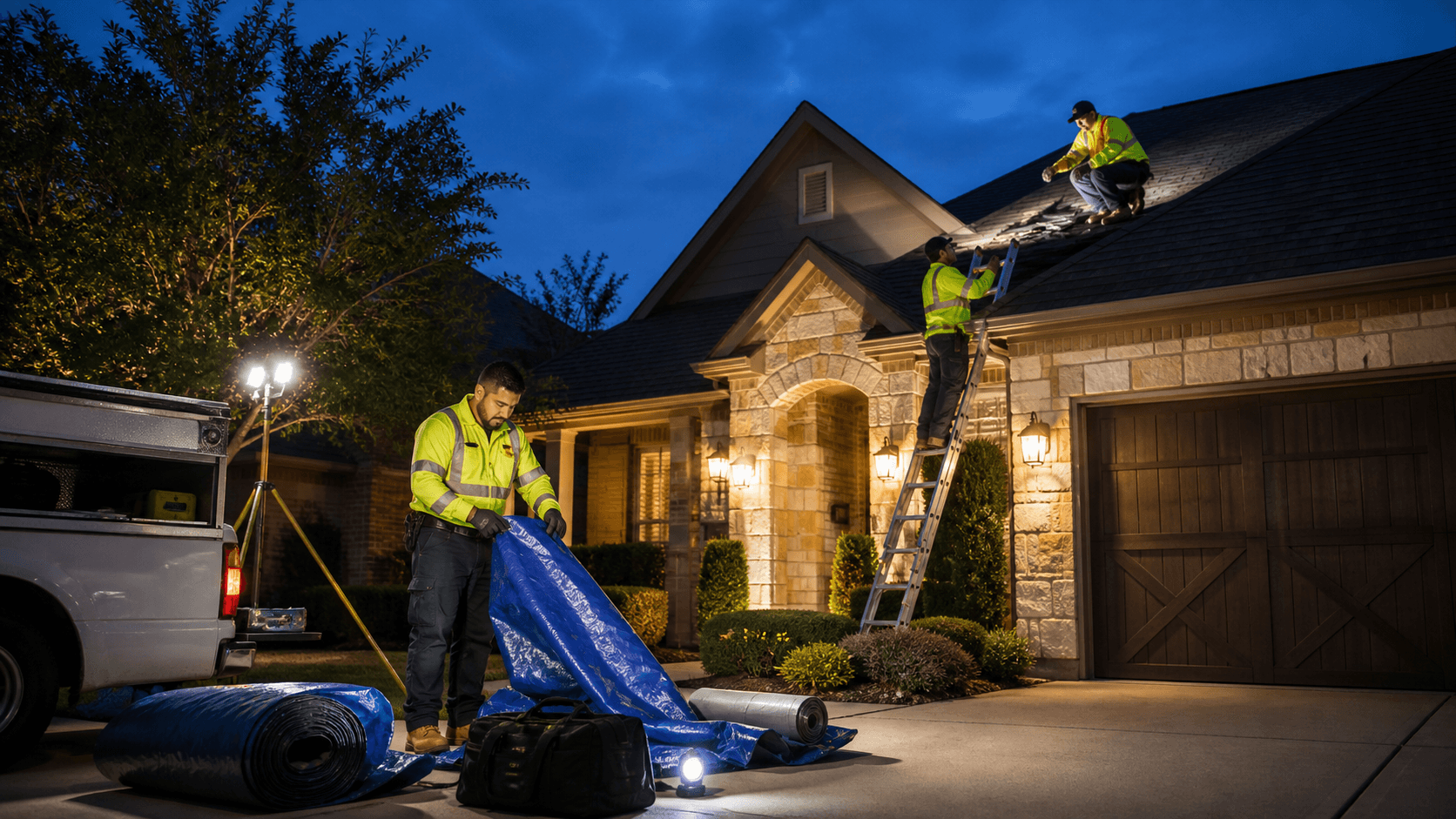
Why Fast, Smart Action After Texas Storms Matters
Roof damage after a Texas storm sneaks up fast. One night everything feels fine, the next morning you see granules in the gutters, torn shingles in the yard, and maybe a brown ring starting on the ceiling. That sinking feeling in your stomach is real, and it is there for a reason.
In North Texas, hail, high winds, and heavy rain can all hit in a single storm. Some damage is obvious, like missing shingles or a branch stuck in the roof. Other damage hides in small hail bruises, lifted shingles, or tiny gaps around vents. Those small issues can turn into leaks, soaked insulation, and even mold inside your home.
Understanding how insurance claim roof repair works helps you act with confidence instead of panic. When you know what to look for, what your policy does, and who should be on your side, you are in a better spot to protect your home and your budget. As a local roofing contractor serving Prosper, Frisco, Celina, Plano, and nearby areas, we help homeowners with storm inspections, documentation for insurance, and honest repair or replacement plans after severe weather.
Spotting Storm Damage Before It Becomes a Disaster
Not all storm damage screams for attention. A roof can look mostly fine from your driveway and still be letting water in. After a strong hail or wind event in North Texas, some common signs of trouble include:
- Shingles that are missing, cracked, or curled
- Dark spots or bruises on shingles where hail has hit
- Loose, bent, or missing flashing around chimneys and walls
- Dented metal on ridge vents, gutters, and downspouts
- Inside the home, water spots, peeling paint, or a musty smell in the attic
Climbing onto your own roof is risky. Slopes are steep, shingles are slick, and one wrong step can lead to a fall. On top of that, many hail hits are hard to see unless you know what to look for. They can appear as small soft spots that slowly wear through the shingle over time.
Timing matters a lot after a Texas storm, because storms often come in waves. If your roof is already weakened and another round of hail or wind rolls through, you can end up with:
- Bigger leaks and stained ceilings
- Rotting wood and damaged decking
- Wet insulation that no longer does its job
- Higher out-of-pocket repair costs later
A professional storm damage inspection gives you a clear picture of what is going on before things get worse. It is a safer and smarter choice than waiting for visible leaks.
How Insurance Claim Roof Repair Really Works
Insurance claim roof repair can feel confusing, especially when you are already stressed from a storm. The process usually follows a simple path:
- A roofing contractor inspects your roof, documents damage, and takes photos.
- You file a claim with your insurance company and share the inspection details.
- An insurance adjuster visits your home, often meeting your roofer on site.
- The adjuster creates an estimate of what they will cover for repairs or replacement.
- A roofing contractor reviews that estimate and plans the work.
A few common insurance terms can make things easier to understand:
- Deductible: The amount you pay out of pocket before insurance pays the rest.
- ACV (Actual Cash Value): What your roof is worth today after age and wear.
- RCV (Replacement Cost Value): What it costs to replace the roof with a similar new one.
- Depreciation: The difference between RCV and ACV, based on age and condition.
- Supplements: Extra items that get added to the claim when more hidden damage is found.
An experienced roofing contractor can help make sure the damage is fully and fairly documented. That includes checking that every storm-related item is listed, from shingles and underlayment to vents and flashing. When the scope of work actually matches what your roof needs, you end up with a safer, longer-lasting repair or replacement.
Choosing the Right Roofer for Your Claim in North Texas
After a big storm, you might see trucks and door-knockers everywhere. Some are local, some are not, and it can be hard to know who to trust. Picking the right roofer for your insurance claim roof repair is just as important as working with your insurance company.
Good signs to look for include:
- A real local presence in areas like Prosper, Frisco, Celina, and Plano
- Proper insurance and any required licensing
- Clear, written estimates that match the work being proposed
- Solid local references and past projects you can verify
Watch out for common red flags that pop up after storms:
- Out-of-town companies that appear only after bad weather
- High-pressure sales tactics or door-knocking that feels pushy
- Promises to "cover your deductible," which can lead to insurance trouble
- Contractors asking you to sign anything you do not fully understand
A reputable roofer will take time to explain what your insurance estimate means in plain language. They will walk you through repair vs. replacement options, talk about materials, and explain the timeline from start to finish. The goal is for you to feel informed, not rushed.
From Approval to New Roof: What to Expect During Repairs
Once your claim is approved, things move from paperwork to actual work. The steps usually look like this:
- Final roof inspection and confirmation of the scope
- Material selection, including shingle style and color, and any upgrades
- Scheduling your project and setting clear expectations for start and finish dates
- Getting any needed permits in your city
On roof-repair or replacement day, you can expect a busy yard and driveway. Crews will typically:
- Arrive early to set up and protect landscaping where they can
- Remove old shingles and damaged materials
- Inspect the decking for any hidden problems and address them
- Install new underlayment, shingles, and roof components
- Clean up debris and run magnets for nails around the property
North Texas spring and early summer bring heat, sudden showers, and sometimes more storms. That can affect scheduling, since we avoid tearing off a roof if strong storms are likely that day. Getting your work on the calendar soon after claim approval helps you avoid long waits during peak storm season.
Take Control of Your Roof Repair After the Next Storm
Waiting until water drips through your ceiling is the most stressful way to find out you have roof damage. A free, professional storm damage inspection after a strong hail or wind event can give you peace of mind, even if we find your roof is still in good shape.
When you understand how insurance claim roof repair works, you are harder to pressure or mislead in the hectic days after a storm. You know what signs to watch for, what questions to ask, and what kind of roofing partner you want on your side. As a local roofing contractor, WM Contracting is here to help homeowners in Prosper, Frisco, Celina, Plano, and surrounding areas with careful inspections, clear documentation for insurers, and honest advice on whether you need repairs or a full roof replacement.
Get Started With Your Project Today
If your roof was damaged in a storm and you are facing an insurance claim, we can guide you through every step so the work is done correctly the first time. Learn how our insurance claim roof repair process helps protect your home and budget while keeping your claim on track. Reach out to WM Contracting with your policy information and photos, and we will schedule an inspection, document the damage, and coordinate directly with your adjuster. Have questions or need to schedule a visit now? Just contact us to get started.